
Endoscopic Spine Surgery: The Keyhole Procedure That Lets You Walk the Next Day
Endoscopic spine surgery uses an 8mm cut so most patients walk the next day. See how it treats slipped disc and sciatica at KT Hospital, Dindigul.
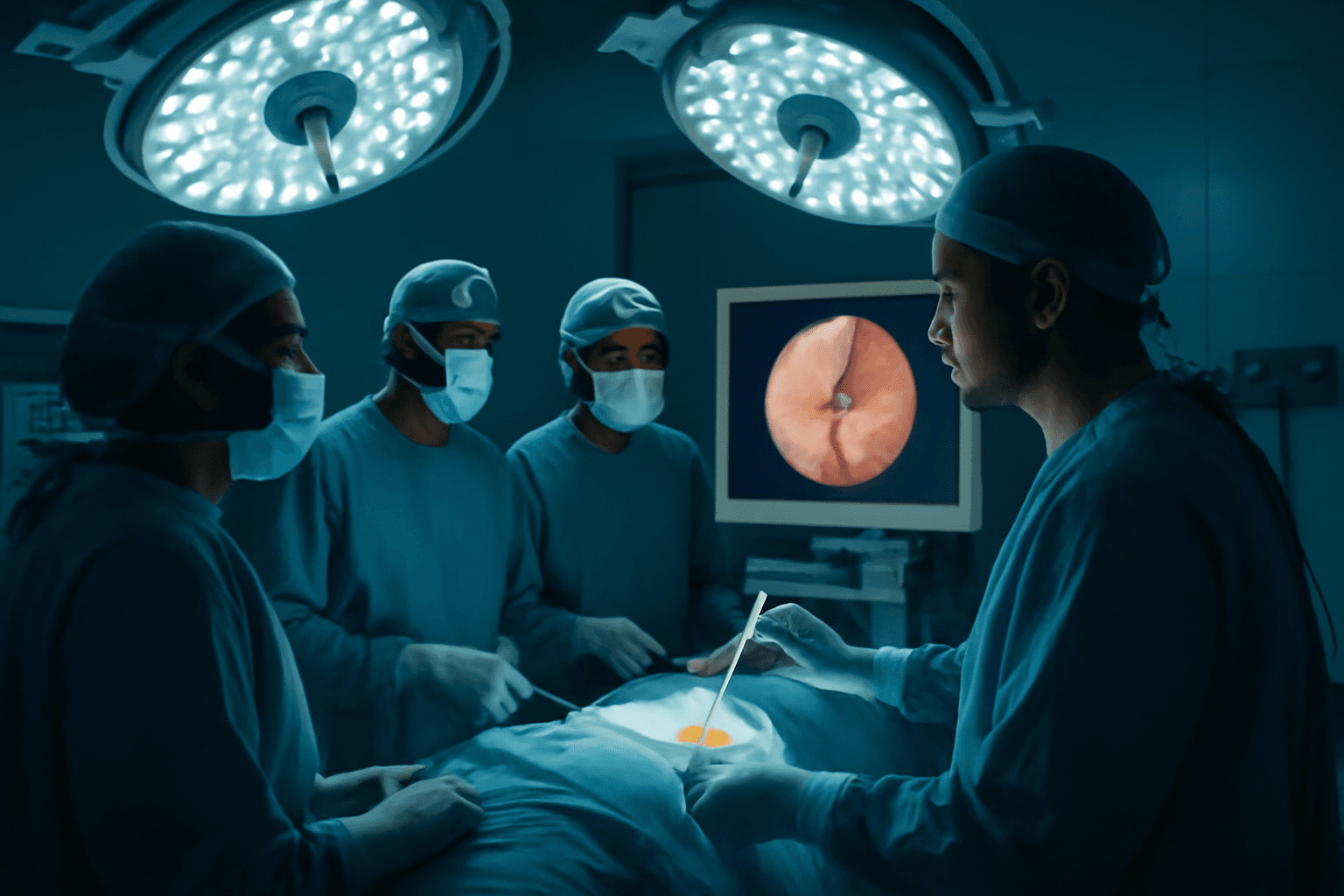
For most people, the word 'spine surgery' brings up a frightening picture: a long cut down the back, weeks in bed, and months before life returns to normal. That picture is now badly out of date. Endoscopic spine surgery has changed what recovery looks like, and it is the procedure many of our patients are most relieved to learn about.
Endoscopic spine surgery is keyhole surgery for the back. Instead of a large open incision, the surgeon works through a cut of around eight millimetres — smaller than the tip of your little finger. A thin tube carrying a high-definition camera and tiny instruments is guided to the exact spot that is causing your pain. The surgeon sees the nerve, the disc and the surrounding tissue on a magnified screen and removes only what is pressing on the nerve.
It is used to treat the conditions that send people to bed in agony: a slipped or herniated disc pressing on a nerve, sciatica where pain shoots down the leg, and spinal stenosis where the canal has narrowed and is squeezing the nerves. The common thread is a nerve under pressure, and the goal of surgery is simply to take that pressure away.
The reason recovery is so fast comes down to what is left untouched. Open surgery has to cut and pull aside muscle to reach the spine, and that muscle damage is what causes much of the post-operative pain and the long recovery. The keyhole approach slips between the muscle fibres instead of cutting through them. Most patients walk the same evening as surgery and go home within two to three days, often with nothing but a single stitch.
It is important to be honest: not every back problem needs surgery, and not every patient is a candidate for the keyhole approach. At KT Hospital we say so plainly. The majority of backs heal with rest, physiotherapy and time. Surgery is offered only when a nerve is clearly trapped and conservative care has not worked, or when there is weakness that should not be left.
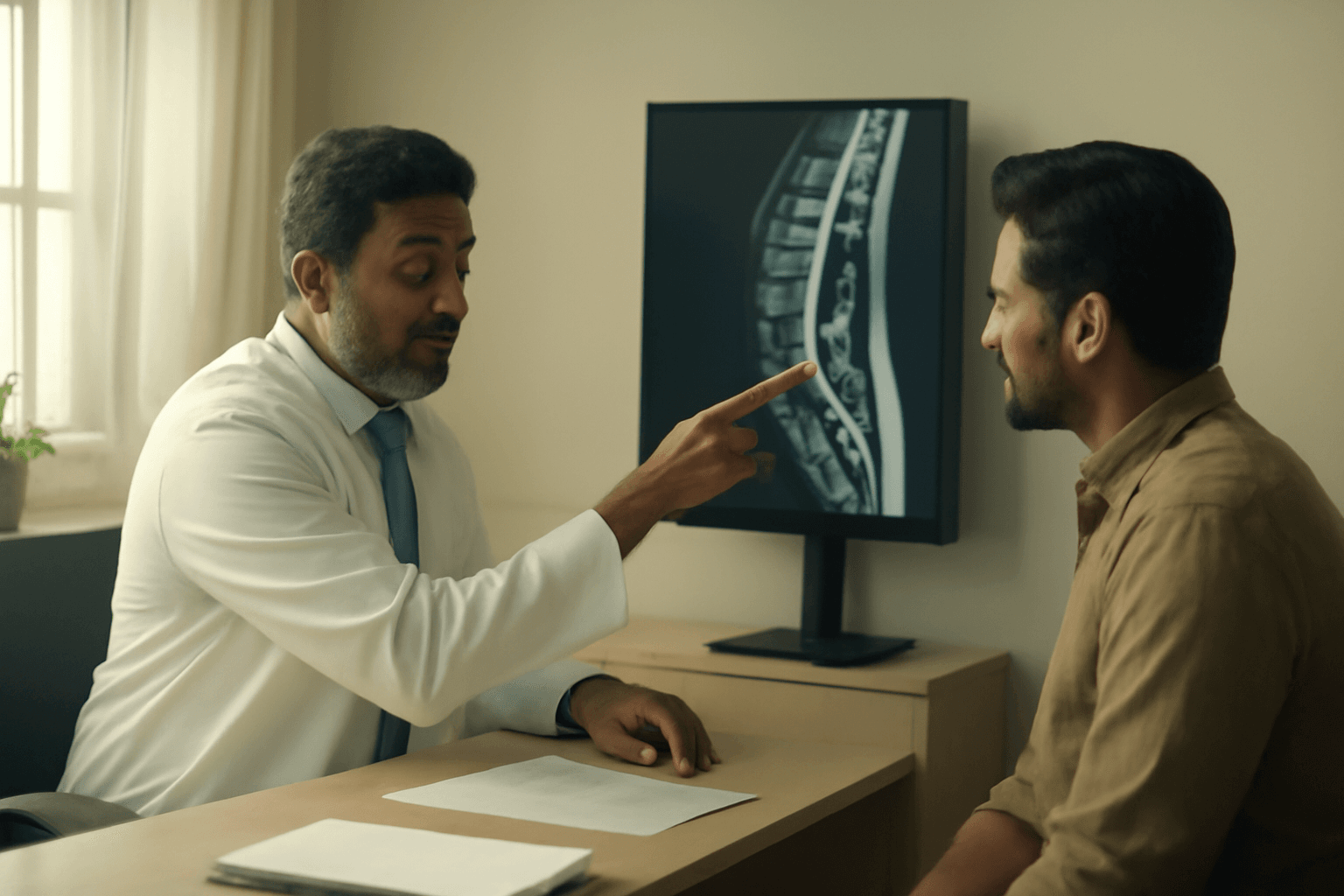
If you have been living with leg pain, numbness or a back that has stopped you working, it is worth finding out whether a keyhole procedure could help. Speak to Dr. Durai Murugan at KT Hospital on Palani Road, Dindigul — he will show you your own scan and explain, in plain words, exactly what is going on.
Frequently asked questions
How big is the incision in endoscopic spine surgery?
Around eight millimetres — often closed with a single stitch.
When can I walk after endoscopic spine surgery?
Most patients walk the same evening and return home within two to three days.
Does a slipped disc always need surgery?
No. Most slipped discs heal with rest and physiotherapy. Surgery is only needed when a nerve is clearly trapped and other treatment has failed.
Have a question about your health?
Our specialists are here to help. Book an appointment or call us any time — we're open 24 hours.
Slipped Disc: Do You Really Need Surgery?
Most slipped discs heal without surgery — and a good surgeon will tell you so. Learn when conservative care is enough and when keyhole surgery is the answer.

Sciatica: Why the Pain Shoots Down Your Leg, and When to See a Doctor
Sciatica causes sharp pain that travels down the leg. Learn the warning signs, what relieves it, and when surgery is needed — KT Hospital, Dindigul.