
Clubfoot in Babies: Why Early Treatment Changes Everything
Clubfoot is highly treatable when caught early. Learn how gentle casting corrects it without major surgery — paediatric orthopaedics at KT Hospital, Dindigul.
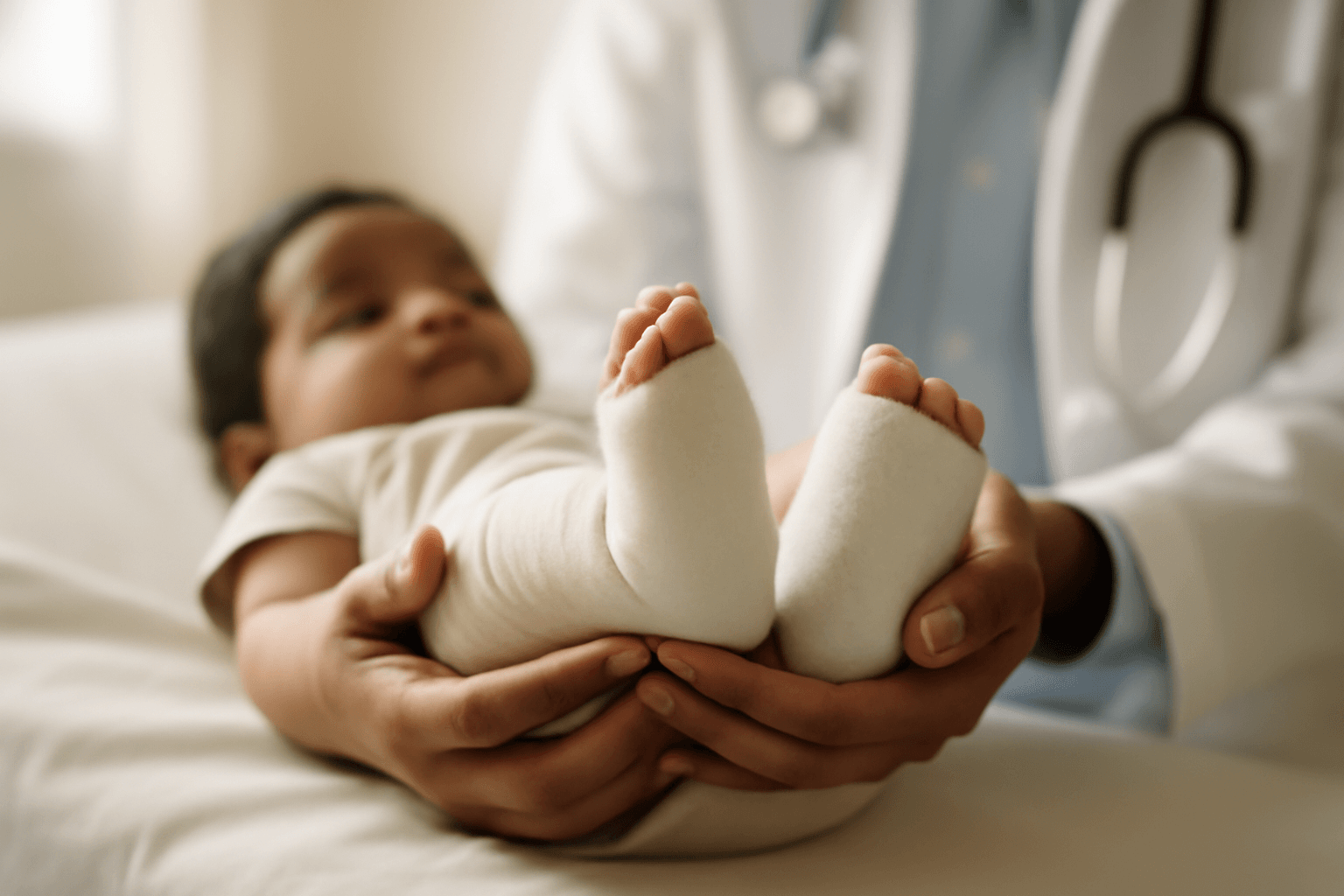
When a baby is born with a foot that turns sharply inward and downward, it is natural for parents to feel worried and even to blame themselves. The first thing worth knowing is that clubfoot is one of the most treatable conditions in children's orthopaedics — and that the outcome is excellent when treatment starts early.
Clubfoot is a condition present at birth in which the foot is twisted out of its normal position. It happens because the tendons and tissues on the inside of the foot and ankle are tighter and shorter than they should be. It is not caused by anything the parents did during pregnancy, and a child with clubfoot feels no pain from it as a newborn.
The reason the first weeks matter so much is that a baby's tissues are soft and remarkably responsive to gentle correction. The standard treatment, called the Ponseti method, takes advantage of this. The doctor gently manipulates the foot into a slightly better position and holds it there with a plaster cast. Every week or so the cast is changed, and each time the foot is coaxed a little closer to normal. Over a series of casts the foot is gradually and painlessly brought into the correct shape.
In most children a small procedure is needed to release a tight heel cord, but this is minor compared with the major surgery that clubfoot once required. After the foot is corrected, the child wears special boots attached to a bar for a period — initially much of the day, then only at night and during naps — to hold the correction and stop the foot drifting back. This bracing phase is the part that needs parents' patience and consistency, and it is the key to a lasting result.
Children who complete treatment go on to walk, run and play normally. The feet look and function well, and most people would never know there had been a problem.
If your child has been born with clubfoot, the most important step is simply to start early. The paediatric orthopaedic team at KT Hospital, Dindigul, offers gentle, growth-aware care and will guide you through every stage.
Frequently asked questions
Is clubfoot caused by something the mother did?
No. It is present from birth due to tight tendons and tissues, and is not caused by anything done during pregnancy.
Can clubfoot be fixed without major surgery?
Yes. The Ponseti method uses gentle weekly casting and usually only a minor heel-cord procedure, followed by bracing.
Will my child walk and run normally?
Yes. Children who complete treatment typically walk, run and play normally.
Have a question about your health?
Our specialists are here to help. Book an appointment or call us any time — we're open 24 hours.
Pregnancy Care, Trimester by Trimester: Scans, Check-ups and Warning Signs
From the first scan to delivery day, good pregnancy care follows a clear rhythm. Here is what happens in each trimester — and the signs that should never wait.

Women's Health After 30: The Check-ups Every Woman Should Not Skip
Most women look after everyone but themselves. These are the screenings and check-ups that quietly protect your health after 30 — and when to book each one.