
Arthroscopy Explained: How Keyhole Surgery Repairs a Joint From the Inside
Arthroscopy repairs a joint through cuts smaller than a coin. Learn what it treats, how it works and why recovery is so fast — KT Hospital, Dindigul.
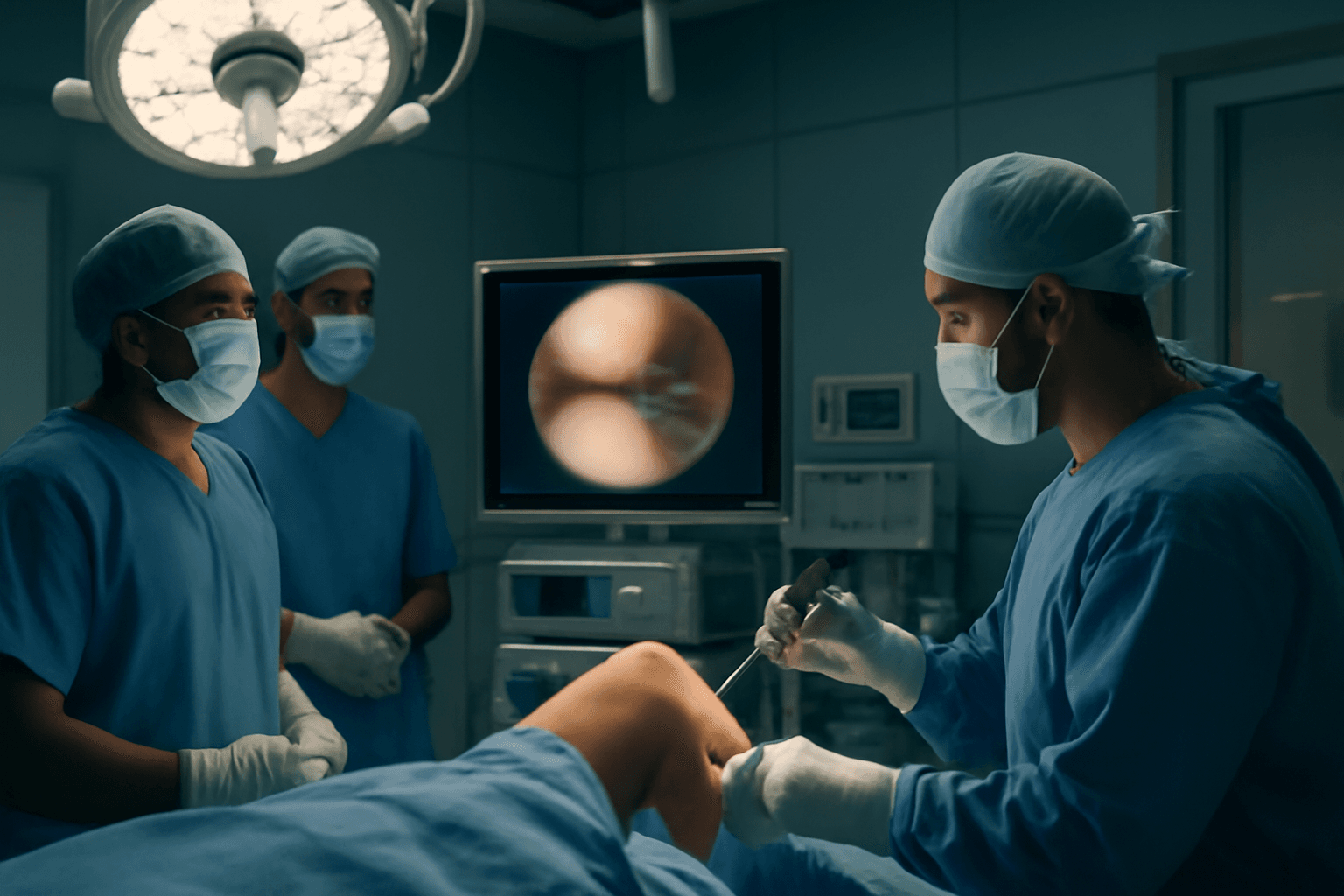
Joint surgery used to mean opening up the joint with a large incision, and with it came a long, painful recovery. Arthroscopy changed that completely. It lets a surgeon see inside a joint and repair it through cuts smaller than a coin, and it is one of the reasons people now go home a day after operations that once meant a long hospital stay.
The word arthroscopy simply means looking inside a joint. A thin instrument carrying a tiny high-definition camera is passed through a small cut, and the inside of the joint appears magnified on a screen. Through one or two further small cuts, fine instruments are introduced, and the surgeon repairs the joint while watching the screen. There is no need to open the joint widely, because the camera sees everything.
It is used across many joints but most commonly the knee and shoulder. In the knee it repairs torn cartilage (the meniscus), reconstructs a torn ACL ligament, and trims damaged surfaces. In the shoulder it repairs the rotator cuff and treats instability and impingement. The same approach helps in the ankle, wrist and hip for the right problems.
The reason recovery is so much faster comes down to how little is disturbed. Because the surrounding muscle and tissue are not cut open, there is far less pain afterwards, a much lower risk of infection, and minimal scarring — just a couple of tiny marks. Most patients go home the same day or the next, rather than staying in for a week.
That does not mean there is no recovery to do. The joint still needs rehabilitation to rebuild strength and movement, and following the physiotherapy plan is what turns a good operation into a good long-term result. But the starting point — walking out within a day or two with two small dressings instead of a long wound — is a world away from old-style open surgery.
If you have a joint problem that has not responded to physiotherapy and rest, arthroscopy may be the answer. The team at KT Hospital, Dindigul, will assess whether a keyhole repair is right for you and explain exactly what it would involve.
Frequently asked questions
What conditions does arthroscopy treat?
Commonly meniscus and ACL tears in the knee and rotator cuff and instability in the shoulder, among others.
Why is recovery faster after arthroscopy?
Because the surrounding muscle and tissue are not cut open, there is less pain, lower infection risk and minimal scarring.
Will I need to stay in hospital after arthroscopy?
Most patients go home the same day or the next, then follow a physiotherapy plan to rebuild strength.
Have a question about your health?
Our specialists are here to help. Book an appointment or call us any time — we're open 24 hours.

ACL Tear: The Recovery Timeline and Getting Back to Sport
Torn your ACL? Learn how keyhole repair works, the realistic return-to-sport timeline and rehab milestones at KT Hospital, Dindigul.

Pregnancy Care, Trimester by Trimester: Scans, Check-ups and Warning Signs
From the first scan to delivery day, good pregnancy care follows a clear rhythm. Here is what happens in each trimester — and the signs that should never wait.